Journal Club
Cell-type resolved protein atlas of brain lysosomes identifies SLC45A1-associated disease as a lysosomal disorder
Cell Volume 189, Issue 3p765-782.e31February 05, 2026
Highlights
• Lysosomal proteomics of brain cell types
• Identification of previously uncharacterized and cell-type-specific lysosomal proteins
• SLC45A1 is a neuron-specific lysosomal sugar transporter
• SLC45A1 loss drives lysosomal and mitochondrial dysfunction
Summary
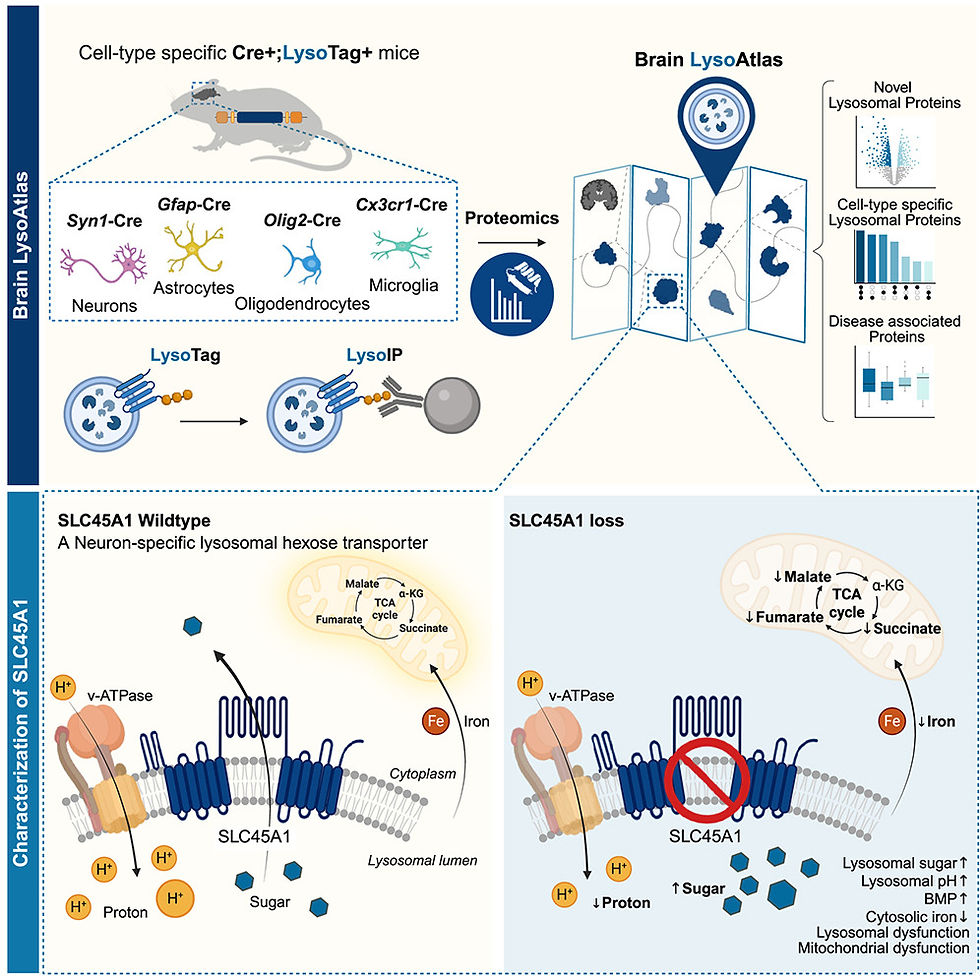
Mutations in lysosomal genes cause neurodegeneration and neuronopathic lysosomal storage disorders (LSDs). Despite their essential role in brain homeostasis, the cell-type-specific composition and function of lysosomes remain poorly understood. Here, we report a quantitative protein atlas of lysosomes from mouse neurons, astrocytes, oligodendrocytes, and microglia. We identify dozens of proteins not previously annotated as lysosomal and reveal the diversity of lysosomal composition across brain cell types. Notably, we identified SLC45A1, a gene whose mutations cause a monogenic neurological disease, as a neuron-specific lysosomal protein. Loss of SLC45A1 causes lysosomal dysfunction in vitro and in vivo. SLC45A1 functions as a lysosomal sugar transporter and impacts the stability of the V1 subunits of the vacuolar ATPase (V-ATPase). Consistently, SLC45A1 loss reduces lysosomal V1 subunits, elevates lysosomal pH, and disrupts iron homeostasis, causing mitochondrial dysfunction. Altogether, our work redefines SLC45A1-associated disease as an LSD and establishes a comprehensive map to study lysosome biology at cell-type resolution.
Commentaires